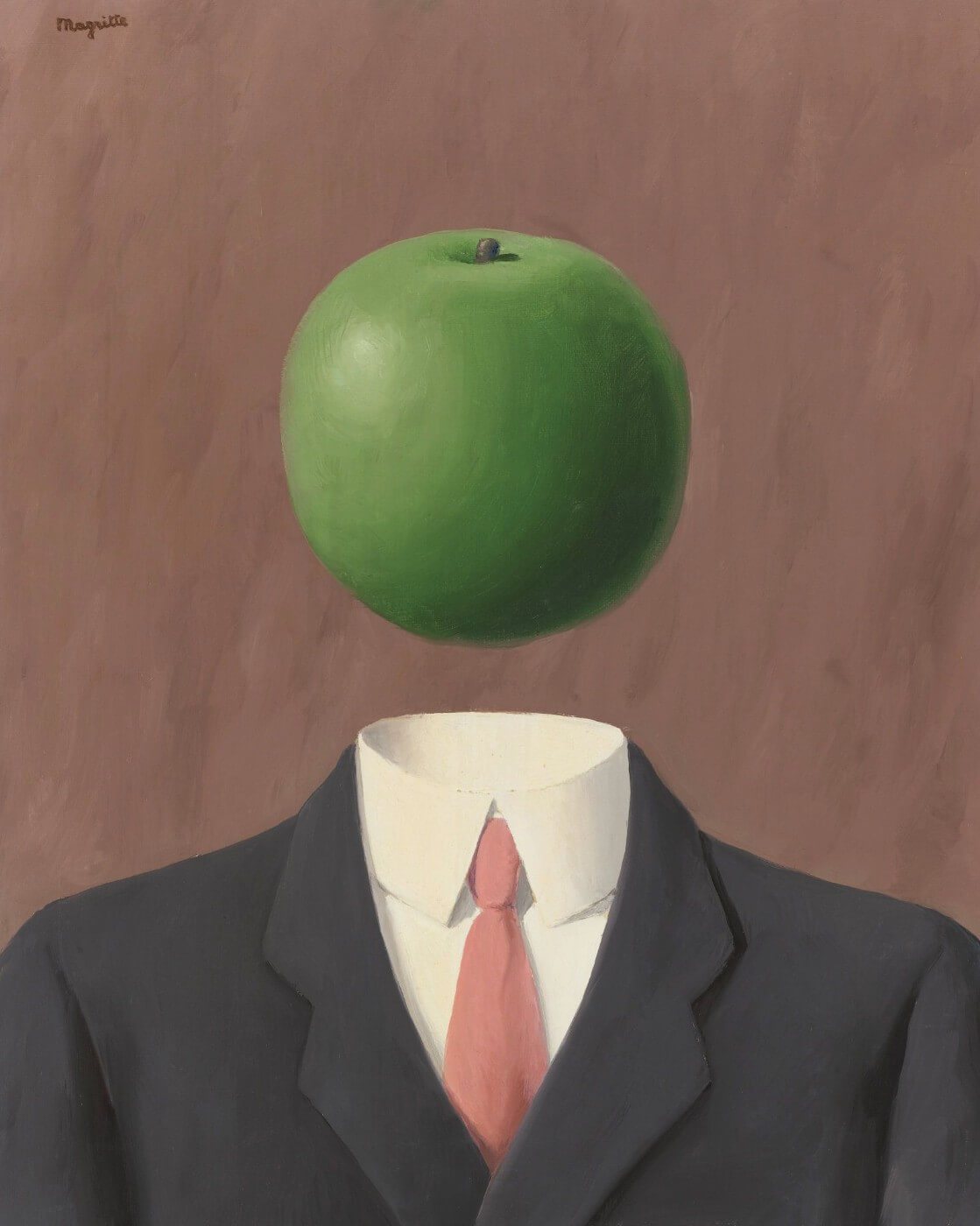
René Magritte, The Idea (L'idée), 1966, Oil on canvas, 41 x 33 cm, Collection privée
마그리트의 작품은 '보이는 것'과 '인식하는 것'의 불일치를 탐구한다. 작품 속에서 사과는 인간의 얼굴을 가리고 정체성을 감추는 오브제가 된다. 마그리트는 남자의 머리를 완전히 사과로 대체하거나, 거대한 사과 위에 작은 테이블을 올려놓으며 일상적 사물을 엉뚱한 방식으로 배치해 현실을 가린다. 평범한 일상의 사물은 설명할 수 없고 알 수 없는 무언가로 변형되어, 보이는 것 뒤의 진실을 감춘다. 정물화의 전통 속 친숙한 사과는 사물의 본질과 현실 자체를 질문하는 초현실적 존재가 되었다.
Magritte's work explores the discrepancy between 'what is seen' and 'what is perceived'. In his paintings, the apple became an object that obscures human faces and conceals identity. He covered reality by placing everyday objects in absurd ways—completely replacing a man's head with an apple, or placing a tiny table atop a giant apple. This ordinary everyday object is transformed into something inexplicable and unknowable, hiding the truth behind what is visible. The familiar apple from the still-life tradition became a surreal entity that questions the essence of objects and reality itself.
마그리트의 사과가 현실을 가리며 신비를 만든다면, 바나나는 가리려 하지만 실패하여 우스꽝스러워진 인간적 순간을 드러낸다.
While Magritte's apple conceals reality to create mystery, the banana tries to hide but fails—revealing the absurdly human moment born of that failure.